

Choosing where to establish or grow a business is as much about quality of life as it is about economics. North Bend offers both. As the premier outdoor recreation destination in the Puget Sound region, North Bend is a city that attracts and retains the kind of educated, active, and community-minded residents that businesses want as both customers and employees.
Located on Interstate 90, only 30 miles east of Seattle, North Bend sits at the gateway to the Cascade Mountains. The city is 35 minutes from downtown Seattle and the Port of Seattle, and 25 minutes from downtown Bellevue. This location places businesses within reach of one of the most connected metro areas in the country while offering the character and livability of a small Pacific Northwest city.
North Bend offers year-round recreation including hiking, fishing, mountain biking, climbing, kayaking, swimming, skiing, snowboarding, snowshoeing, and wildlife observation. For businesses recruiting talent from the greater Seattle metro area, this is a meaningful differentiator.
People who want to live near the mountains, the trails, and a genuine community are increasingly choosing North Bend, and that growth shows in the numbers.
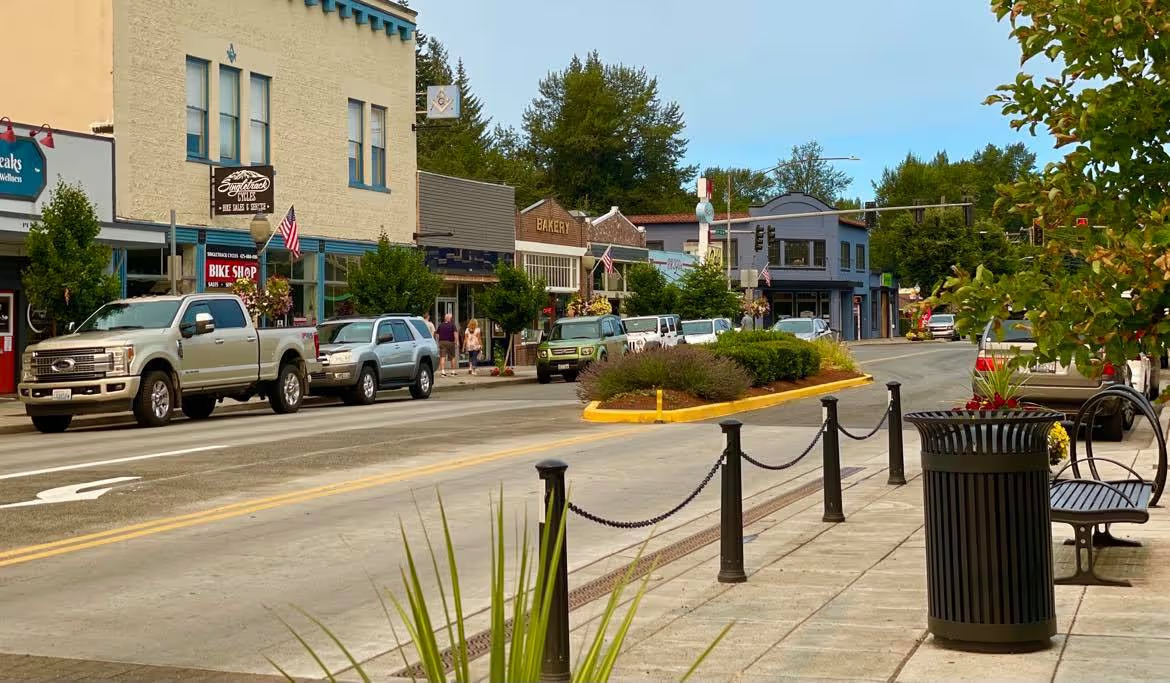
The city's community events throughout the year feature local artists, wineries, and musicians, drawing residents and visitors to a historic downtown that offers a diverse range of dining and shopping alongside the North Bend Outlet stores. It is a downtown that reflects the character of the city: accessible, active, and worth returning to.
For businesses looking to plant roots in a city with strong fundamentals, a growing residential base, available development property, and proximity to international ports, North Bend makes a compelling case.
The City of North Bend is a highly livable, highly educated community and the premier outdoor recreation destination in the Puget Sound region. Located 30 miles from downtown Seattle, North Bend has experienced significant residential growth in recent years.
North Bend's access to the outdoors, proximity to international ports, and available development property make it a strong destination to relocate, grow, or establish a business. As a gateway to the Cascade Mountains, North Bend sits on Interstate 90 - a 35 minute drive from downtown Seattle and the Port of Seattle, and a 24 minute drive from downtown Bellevue.
The City of North Bend's economic development vision is to nurture an economically diverse and sustainable community that reflects North Bend's identity as a highly livable town and outdoor recreation destination.
Looking towards the future, the city's priorities include five goals:
Businesses are successful in North Bend and can access city services with predictability and consistency.
The City of North Bend meets its financial obligations, promotes efficient development, and creates conditions for long-term business success.
A variety of housing types and price ranges makes North Bend more livable and accessible for residents at all stages of life.
North Bend uses its natural resources, arts and cultural assets, and recreation system to attract visitors, residents, and businesses alike.
North Bend is committed to making the community safe and accessible for pedestrians and cyclists of all ages and abilities.
For businesses looking to learn more about North Bend's economic development priorities and available resources, the following are helpful starting points.
Understanding who lives and works in North Bend is an important starting point for any business considering the area. The following data reflects the city's demographic profile, household economics, and employment landscape.
North Bend's population is characterized by several dominant lifestyle segments, offering businesses a clear picture of the consumer base they would be serving.
Top Tier (40.6% of households in this area):
Nearly half of householders are between the ages of 45 and 64, and households are primarily married couples with or without children living at home. Many families send their children to private K-12 schools. Approximately three-quarters of residents hold undergraduate or graduate degrees, and they typically hold positions as executives, professionals, or business owners. A growing number of workers in this segment work from home. This segment has the highest net worth among all segments. Neighborhoods are almost exclusively composed of single-family homes. Residents tend to shop at upscale retailers and frequent fine dining restaurants. They hire personal services such as financial planners, personal chefs, and gardeners. Theseindividuals often drive high-end vehicles and own vacation homes.
Savvy Suburbanites (24.5% of households in the area):
Residents frequently use credit cards, and they seldom have outstanding monthly balances. They tend to invest a significant amount of resources on home improvement and landscaping. Residents have a variety of investment and retirement accounts. Mid-Atlantic. Some couples have children who have grown up and left the house, and around a quarter still have kids at home. Residents work in professional fields such as management and finance. The combined wages of both spouses position these families solidly in the middle to upper income tiers. Investments, retirement income, and valuable properties also contribute to the high net worth of households commonly found in these neighborhoods. Residents in this segment gravitate toward suburban communities, which include both newly developed and well-established areas, within major metropolitan areas.
Urban Chic (21.6% of households in this area):
Predominantly composed of married couples, many are raising young children. They are highly educated and hold professional positions in technology, health care, and education sectors, as well as a notable number who are self-employed. Some have additional earnings from interest, dividends, and rental properties. Household incomes generally fall within the upper tier, and many are significantly higher than the national average. They have substantial net worth and retirement savings. Most households own one or two vehicles. They typically have multiple credit cards that offer airline miles, which they use for frequent domestic and international travel. They tend to invest in various assets, including valuable homes and 401(k) retirement plans.
Neighborhood Spirit (6.7% of households in this area):
The population skews slightly older, with a higher proportion of people aged 45 to 64. Households tend to be large and multigenerational, including adult children living with parents. Residents are often employed in skilled occupations, with notable self-employment and jobs with local government, and may receive income from interest, dividends, and rental properties. Homeownership is prevalent, with most homes valued at $500,000 or higher and occupants living in them for many years. Commuting is a significant aspect of life, and many households own multiple vehicles. Consumers buy computers, printers, and tablets at warehouse clubs or electronics stores. Residents tend to own or lease hybrid vehicles and purchase natural and organic foods. Homeowners invest in home improvement projects, frequently enlisting contractors.
Professional Pride (6.5% of households):
Over three-quarters of all residents aremarried, and many households have multiple children enrolled in K-12 schools. Over half of residents hold bachelor's or graduate degrees, and they tend to be employed in technology, engineering, and management roles. A significant portion of these individuals choose to work from home. Households tend to have dual incomes, and many individuals earn some of the highest salaries in the nation. Residents typically live in communities featuring newly constructed, owner-occupied single-family homes in the expanding outer suburbs and exurbs of major metropolitan areas. Many homeowners have a mortgage due to new construction costs.Residents tend to shop at large retail establishments. They often buy organic foods and frequent fast-casual restaurants. Home improvement and remodeling projects are common, and homeowners often seek professional assistance for lawn maintenance and landscaping.
Population:
The 2025 estimated population for the greater North Bend area was 17,390 with a projected growth to 17,810 by 2029.
Household Income:
The 2025 median household income was $237,490 with a 2029 projection of $272,780.
Housing:
The median estimated home value is $1,030,000, reflecting a 12-month change of -5.79%.
Education:
31.44% of residents hold a bachelor's degree and 23.01% hold a graduate or professional degree, reflecting a highly educated community.
Commute:
81.01% of residents drive alone to work, with 30.52% working from home.
North Bend's employment base spans a range of sectors, reflecting a diversified local economy with capacity to support businesses across industries. The leading employment sectors currently include:
Taken together, this data reflects a community that is educated, economically strong, and continuing to grow. For businesses evaluating North Bend as a location, the numbers make a compelling case.
North Bend's location on Interstate 90 places it at the intersection of natural opportunity and regional connectivity. For businesses evaluating the area, the following data points reflect the strength of North Bend's position within the greater Puget Sound region.


North Bend is located off I-90, a primary transportation corridor with significant daily traffic counts.
North Bend's regional position puts it within close reach of Seattle, Bellevue, Redmond, and Sammamish.
Alongside I-90, State Route 18 and Highway 202 serve as key regional links connecting North Bend to the broader metro area.
47,000+ travelers pass through on I-90 each day.
590 acres of commercially zoned land are available for development.
North Bend's total retail trade demand is $930,000,000.
North Bend's infrastructure, location, and available land make it one of the most strategically positioned cities in the Puget Sound region for businesses looking to grow.
Welcome, and thank you for choosing North Bend as the home for your business. As part of our commitment to supporting businesses at every stage, the following information outlines the steps and resources needed to establish your business in the city.
Every person engaging in business within the City of North Bend during any portion of any taxable year must obtain a valid and subsisting license, commonly known as a "business license." This requirement applies to home occupations, suppliers, contractors, and subcontractors.
The city partners with the Washington State Business Licensing Service to issue city business licenses. This combined licensing system allows the business owner to meet local and state requirements with one transaction. A city license will be added to your State Master Business License as an addendum. City business licenses are renewed annually and expire on the date established by the business licensing service.
Each license is personal and nontransferable. If a business is conducted at two or more separate locations by one taxpayer, a separate license is required for each location, and a separate registration fee and handling fee must be paid for each place that a business license is issued.
The City of North Bend requires all businesses operating within its jurisdiction to file and pay B&O taxes. This tax funds municipal services that contribute to the quality of life in our community, including infrastructure maintenance, public safety, and general fund obligations.
Key details about B&O tax filing:
Who must file: Any business conducting activities within the City of North Bend is subject to B&O tax requirements.
Filing frequency: B&O tax filings are typically required quarterly, based on your business activity.
Due dates: Returns and payments are due on the last day of the month following the close of each quarter.
How to file: Paper forms and checks can be mailed to the address provided on our website.
If you have any questions or need assistance, please reach out to the city's tax team at licensing@northbendwa.gov or (425) 888-7630.
Fillable B&O Tax Forms
Business and Occupation Quarterly Tax Fillable Form (PDF)
City of North Bend Square Footage B&O Tax Fillable Form (PDF)
Certification of Vacancy Fillable Form (PDF)
Whether you are new to North Bend or new to the permitting process, the city's goal is to make procuring a permit as accessible and straightforward as possible.
If registering a business physically located in North Bend, your license may be subject to zoning approved by the city's Community and Economic Development Department.
Home-based businesses and home occupations must comply with the Special Rules for Home Occupation (PDF). By submitting a business license application for a home-based business or home occupation, you are affirming that your business is in conformance with the Special Rules for Home Occupations.
North Bend Municipal Code NBMC 5.16 requires all peddlers, solicitors, and transient merchants to obtain a Solicitors License with the city.
Review the City of North Bend's Taxes, Rates, and Fees Schedule.
Additional forms to ensure compliance with the city are found in the Form Center.
Guidance on North Bend's Municipal Code provides a full codification of the general ordinances of the City of North Bend.
North Bend's development projects include current and proposed residential, commercial, industrial, and private developments.
The city of North Bend provides a comprehensive suite of maps and tools to help residents, property owners, and developers understand the city's land use framework and development activity.
Land Use & Zoning
Property & Addressing
Environmental & Hazard
Flood Insurance Rate Map (FIRM)
Development Activity & Permitting
Building Department Active Permit Map
Major Commercial Developments
Projects Pipeline
Transportation Developments
North Bend is investing $54 million over the next few years to support commercial and residential growth. Funding will be used for the following:
Projects Pipeline
North Bend is open for business and growing. Strategically positioned along the I-90 corridor with direct access to Seattle and the broader Pacific Northwest market, the city offers a competitive environment for businesses in manufacturing, technology, aerospace, biosciences, healthcare, and the outdoor industry.
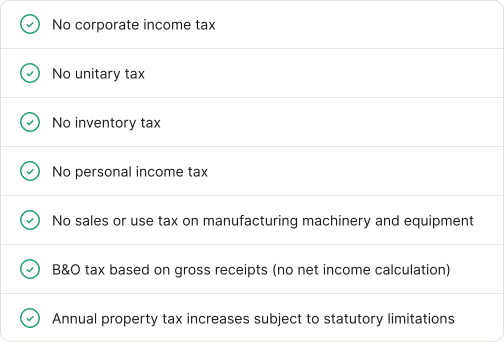
Washington State's tax structure is among the most business-friendly in the nation, with no corporate income tax, no personal income tax, no inventory tax, and no sales or use tax on manufacturing machinery and equipment. Combined with North Bend's stable property tax environment and predictable regulatory framework, the region offers a compelling cost of doing business.
The city is actively investing $54 million over the next six years in infrastructure to support commercial and residential growth - including new roundabouts, expanded sewer capacity, and improved parks and trailheads. These improvements are designed to meet the needs of incoming businesses and a growing residential workforce.
A strong development pipeline signals sustained momentum. From immediately available industrial space at the Alpental Logistics Center to the planned Mt. Si Industrial Center - a 315,000 square foot, three-building campus - North Bend is building the physical foundation for long-term economic expansion. Hospitality investment, including two major hotel and convention projects, further positions the city as a destination for business travel, events, and tourism.
Reliable utilities, high-speed fiber connectivity, and a municipal water and sewer system with recent capacity expansions round out an infrastructure profile built to support businesses at every stage of growth.
Household income growth
3.07%
2023–2028 projected
Per capita income growth
3.45%
2023–2028 projected
Infrastructure investment
$54M
Over next six years
Total property tax levy
$8.58
Per $1,000 assessed value
Alpental Logistics Center
115,000 sq ft industrial
Available
Peaks Industrial Building
41,000 sq ft · 2.54 acres
Two office nodes
2026 delivery
Mt. Si Industrial Center
315,000 sq ft · 3 buildings
Developed by Panattoni
2027–28 delivery
Wyndham Hotel
121 rooms · Full service
Conference facilities, restaurant, rooftop bar
Hospitality
Snoqualmie Convention & Hotel Center
215 rooms
2,000-seat entertainment & convention center
Hospitality
Electricity — Tanner Electric (large commercial)
First 20 kW
$0.0875/kWh

After 20 kW
$0.0747/kWh
Natural gas — Puget Sound Energy
Rate
$1.47/therm
Service pressure
60 psig
Water — City of North Bend (monthly base)
5/8" meter
$37.73
1" meter
$88.24
2" meter
$273.22
All usage
$2.72/cu. m
Fiber — Xfinity high-speed
50 Mbps
$49.99/mo
1,250 Mbps
$334.99/mo
Major Employers and Key Industry Sectors
As one of Washington State's premier outdoor adventures destination and its close proximity to Seattle's tech hub, the predominant industries in the area reflect this lifestyle. The major manufacturers in the North Bend are include, but are not limited to the following: